
A Day That Brought People Back Into Focus
The DO OD conference yesterday provided something I had not realised I needed, time and space to reflect, observe and focus on having confidence in change. The opening energiser on relational mindfulness set the tone for the whole day. It was simple, quiet, and surprisingly grounding after the chaos and energy of racing across London through a network of Tube rides. There were no clever tools or complicated instructions in this session. Just Emma Donaldson-Feilder providing an invitation to pay attention to the person in front of us and to the quality of the exchange we were creating together. Agreements were made and we embarked on the challenge to quite the noise and be intentional and mindful.
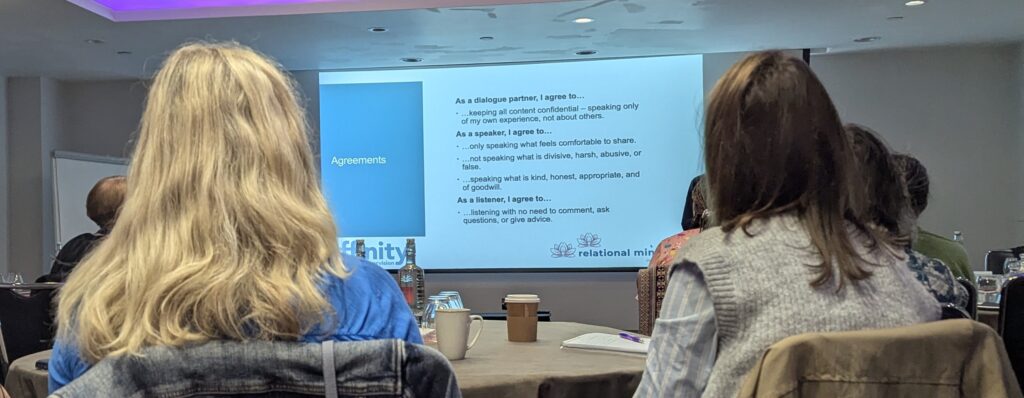
The exercise reminded me how easily we slip into habits that make communication feel rushed. Sometimes we listen while preparing our response. We want to fill pauses because silence can feel awkward. We assume we know where someone is heading before they have finished speaking. The session asked us to set those habits aside for a moment and to be present in a way that felt both gentle and intentional. It was a small practice, although it revealed how much more spacious conversations can feel when we give them our full attention.
Communication That Builds Rapport Rather Than Speed
Throughout the rest of the conference, I found myself returning to that early experience. It shaped how I listened to speakers and how I approached conversations with other delegates. It softened the pace and encouraged me to notice the small signals that often get lost when we are moving too quickly. A shift in tone and pace of conversation delivery. A spark of enthusiasm and the speed that often comes with these flashes of energy. These are the cues that help us understand one another, yet they are easy to miss when we are focused on getting through the agenda.
In team settings, especially in the NHS where time is tight and pressure is constant, communication can become functional rather than relational. We exchange information, but we do not always connect. Relational mindfulness offers a way back to something more human. It helps us build rapport in a way that feels natural rather than forced. It encourages us to listen with curiosity rather than urgency. Critically, it also reminds us that understanding grows from attention, not from speed which can be the killer of connection.
Staying Human in a World That Is Becoming More Digital
AI was present in the forefront and background of many conversations during the day. It seemed every conversation centred around of featured AI, heavily. Some people were exploring how it might support their work and others were unsure how to relate to it. What struck me was the contrast between the digital tools we are learning to navigate and the deeply analogue nature of the opening session. It highlighted something that is becoming increasingly important. Technology can help us organise, analyse, and streamline, but it cannot replace the warmth and beauty of human connection.
In workplaces that are becoming increasingly digital, the skills that matter most are often the ones that feel the most ordinary; the ability to listen without rushing, using Michael West’s compassionate leadership values of listening to understand, not listening to reply. We should have the patience to let someone finish their thought and a willingness to be present even when the day is busy. These are not dramatic skills, yet they shape the quality of our relationships and the trust we build with colleagues. They also help us stay grounded when the pace of change feels overwhelming. And if we’re honest, those working in the NHS will know that the pace is more often than not, relentless.
The challenge is not to resist technology. It is to stay rooted in the human craft of communication while using digital tools with care. Relational skills might be seen as old fashioned. But they form the foundation that helps teams work well together, especially when we work in environments of high pressure and where resources are stretched. These skills shape how we build rapport, how we collaborate, and how we create the conditions for trust in our everyday work with colleagues.
A Closing Reflection
As I left the conference and made my way out of the train station, my thoughts returned to the first exercise. The notional simplicity of two people who had never met before having a moment of attention. I was part of a very timely reminder that communication begins with presence.
Relational mindfulness in teams is a technique to master. It is a way of being with others that helps us communicate with more care and intention. It invites us to slow down, to notice, and to create conversations that feel more grounded and crucially, more generous. In teams, in the NHS, and in any workplace where people rely on one another, these skills matter. They help us stay human in a world that is changing quickly, and they remind us that connection is not a luxury, it is the heart of how we should work together.