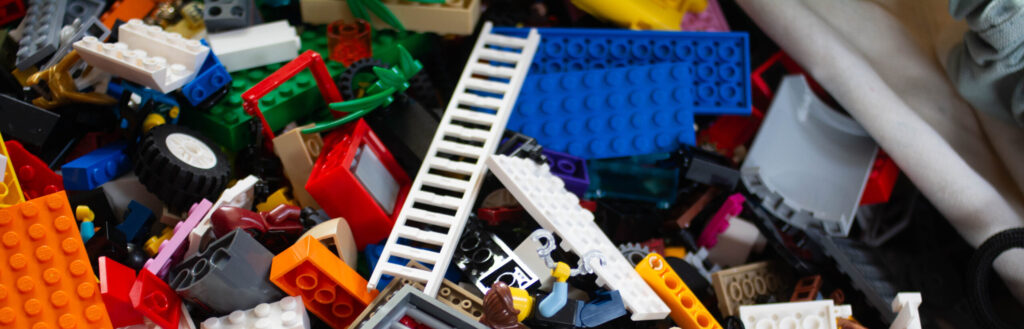
The Quiet Appeal of the LEGO® Ladder
There is something quietly compelling about a LEGO® ladder. It is simple, familiar, and easy to overlook in a pile of brighter, more dramatic pieces. Yet people reach for it when they want to express something that sits just beyond the obvious. The ladder often appears when someone is thinking about movement, but not in the predictable upward sense we usually associate with it. It becomes a way of exploring how we reach for things, how we navigate effort, and how we understand the spaces between where we are and where we hope to be.
A ladder can represent progress, but not the tidy, linear kind that fills motivational posters. It can speak to the unevenness of real growth. Some rungs feel close together and easy to climb. Others feel spaced too far apart, as if the next step requires more energy than we have. People often use the ladder to talk about the rhythm of their own development. They describe moments when they moved quickly, followed by long pauses where nothing seemed to shift. The ladder becomes a way of acknowledging that progress is rarely smooth, and that rest is part of the journey rather than a sign of failure.
Reaching in Real Life: Movement That Isn’t Always Upward
Sometimes the ladder appears in conversations about connection. It can represent the effort required to reach someone who feels distant, or the patience needed to rebuild trust after a difficult period. In conflict work, the ladder often surfaces when someone is trying to understand another person’s position. It becomes a symbol of the climb involved in seeing a situation from a different height or angle. The ladder helps people talk about the emotional labour of meeting others where they are, and the courage it takes to move toward them even when the path feels uncertain.
In community settings, the ladder can highlight the structures that help people rise together. It might represent shared effort, mutual support, or the collective work of building something that lifts everyone. It can also reveal where the rungs are missing. People use the ladder to talk about barriers that make participation difficult, or about the invisible work required to create opportunities that others take for granted. The ladder becomes a way of naming the gaps without assigning blame, and of imagining what might be possible if those gaps were bridged.
The ladder also invites reflection on ambition. Not the loud, competitive kind, but the quieter desire to stretch toward something meaningful. It can represent a personal goal, a creative project, or a change someone is trying to make in their life. The ladder helps people explore what motivates them, what holds them back, and what they need in order to keep moving. It encourages a gentler conversation about aspiration, one that honours both the hope and the hesitation that often sit side by side.
When the Ladder Lies Flat
There are times when the ladder is placed horizontally rather than upright. This simple shift changes the entire meaning. A horizontal ladder can represent stability, grounding, or a foundation that needs strengthening before anything else can happen. It can also symbolise a bridge, a temporary resting place, or a reminder that not every moment requires upward movement. This version of the ladder often appears when someone is learning to slow down, or when they are recognising the value of staying close to the ground for a while.
The ladder helps surface questions that are easy to ignore in the rush of daily life. What are we reaching for. What supports us as we climb. Where do we need to pause. What do we need to let go of in order to move again. These questions are not always comfortable, but they are often the ones that lead to genuine insight.
If you were holding a LEGO® ladder right now, how might you place it. Upright, reaching toward something just out of view. On its side, offering a moment of rest. Leaning gently against another brick, waiting for the right time to climb. The ladder invites you to notice your own pace, your own direction, and your own sense of readiness. It reminds you that reaching is not always about height. Sometimes it is about intention, patience, and the quiet courage to take the next step when you are ready.